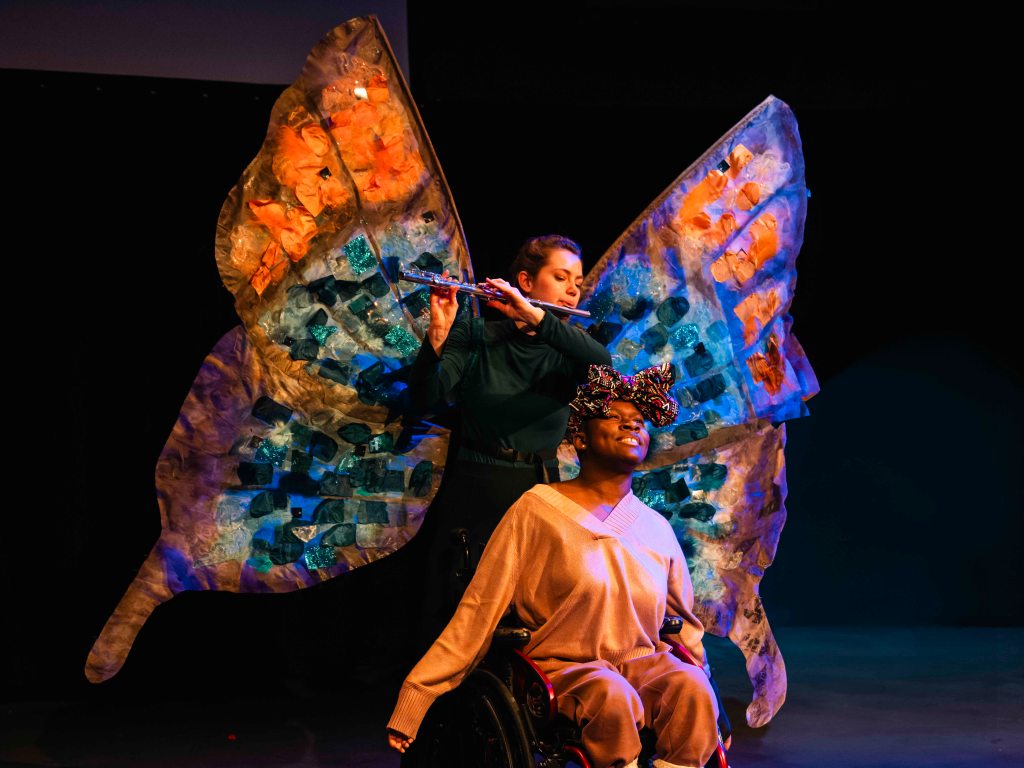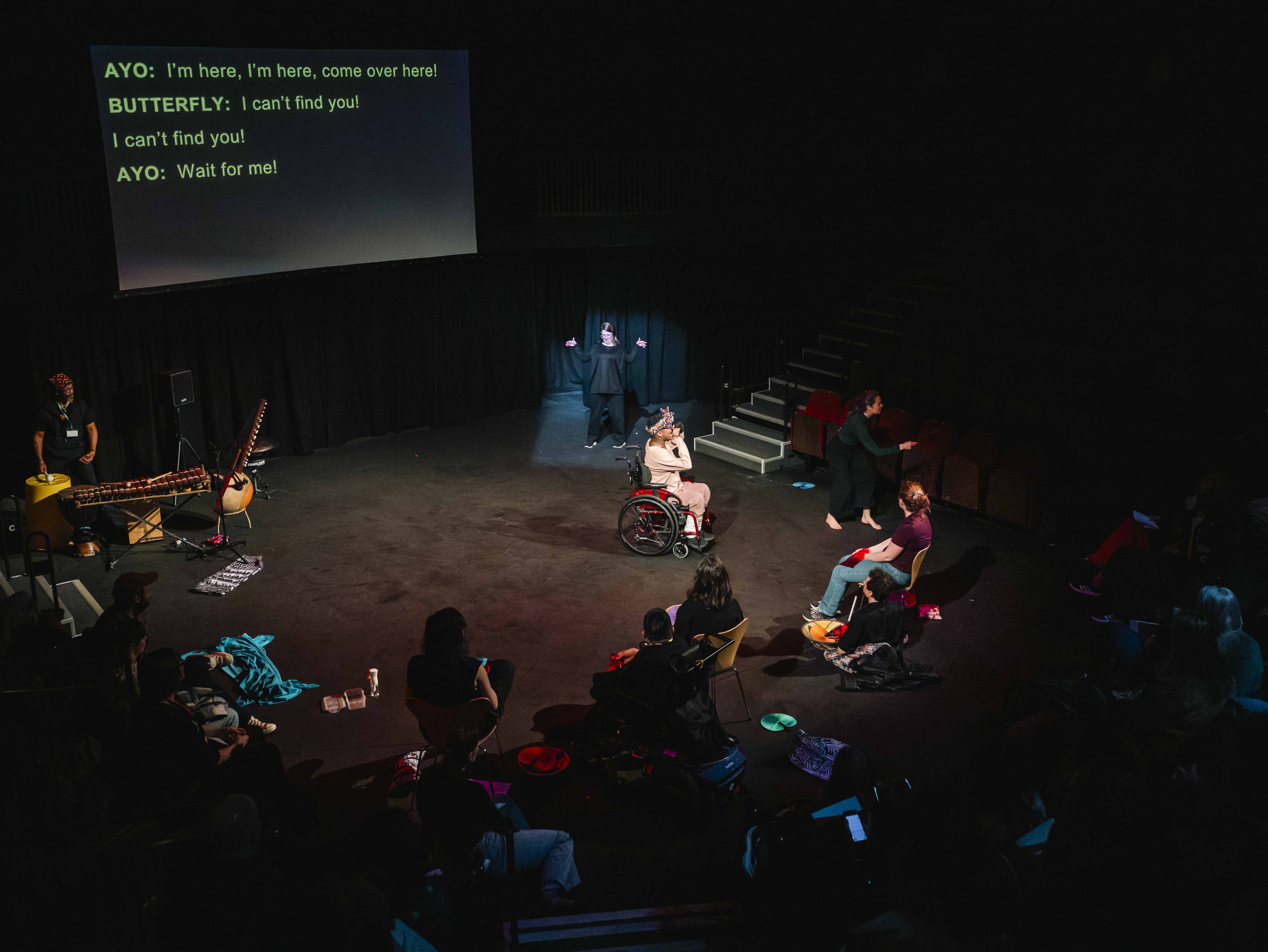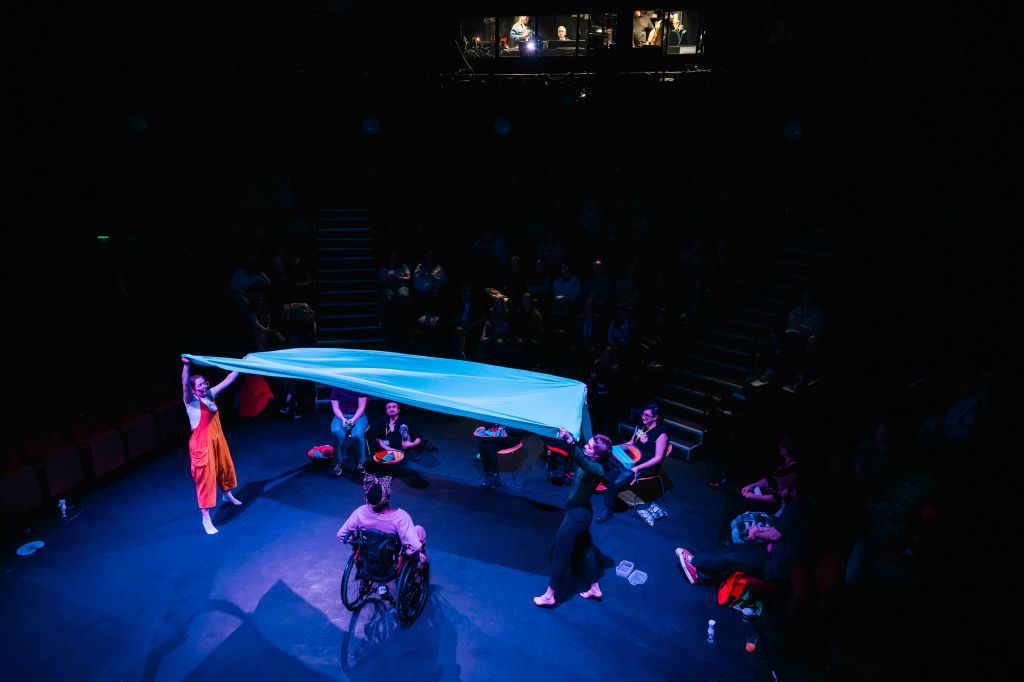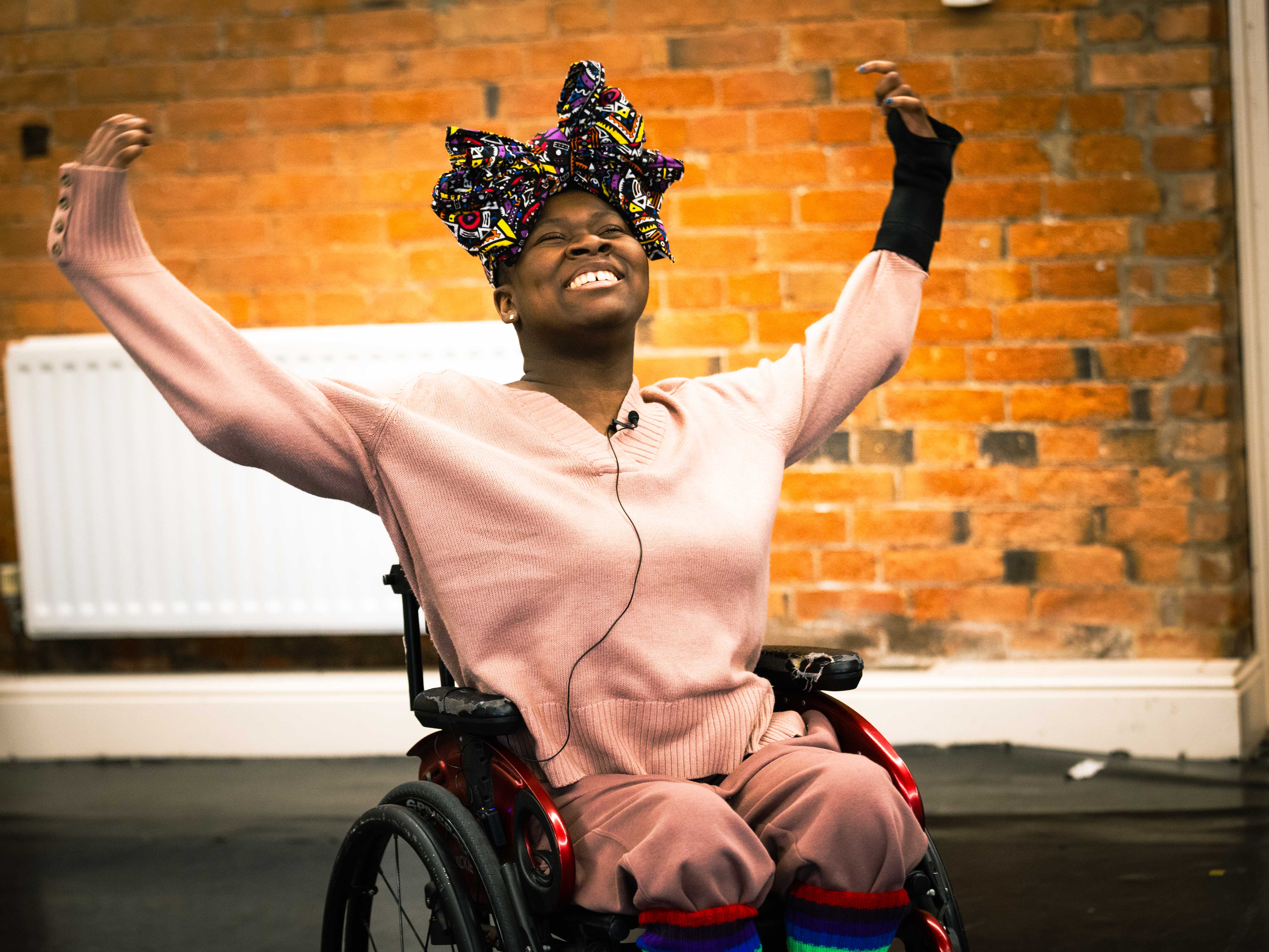
‘AYO’, a multisensory piece aimed at disabled children and their non-disabled siblings and peers through how the story is told in a sensory approach. The piece will be inclusive of children who are visually impaired and/or deaf and children with multiple/complex disabilities (PMLD).
Ayo is a girl with cerebral palsy who goes on a family holiday to Nigeria. Ayo meets an enthralling butterfly in Lagos who distracts her, and she becomes lost. They overcome accidents and the unfamiliar sights and smells. Ayo is eventually reunited as she makes it to the beach.
Synopsis
Ayo is a young girl who goes on a family holiday to her Father’s home Country Nigeria. Ayo meets an enthralling butterfly in Lagos whilst on the way to the beach. The butterfly distracts her and they go on a journey together overcoming traffic, trips, falls and the unfamiliar sights and smells. Ayo gets lost in Lagos and has to get to the beach to be reunited with her parents. Ayo also happens to have Cerebral Palsy.
‘Ayo’ is a multisensory piece which aims to engage disabled and non-disabled children through how the story is told in a sensory approach. The piece will be inclusive of children who are blind, visually and hearing impaired. The piece will also provide tactile opportunities and ways for parents and carers to support children with multiple and complex disabilities as well as capturing the attention and interest of their neurotypical siblings and peers.


Who is it for:
Ayo is aimed at pre-school-primary school aged children who access both mainstream and SEN settings.
Why ‘Ayo’?
We need a space and theatre pieces which join the ‘PMLD’ and ‘mainstream’ worlds together. Many children with multiple and complex disabilities and needs have neurotypical siblings and peers. I want to create and tour theatre which joins the two together and allows children with different needs and modes of engaging to be able to enjoy the same story. We also need representation of little Brown/Black girls on the stage who have disabilities which are normalised.